
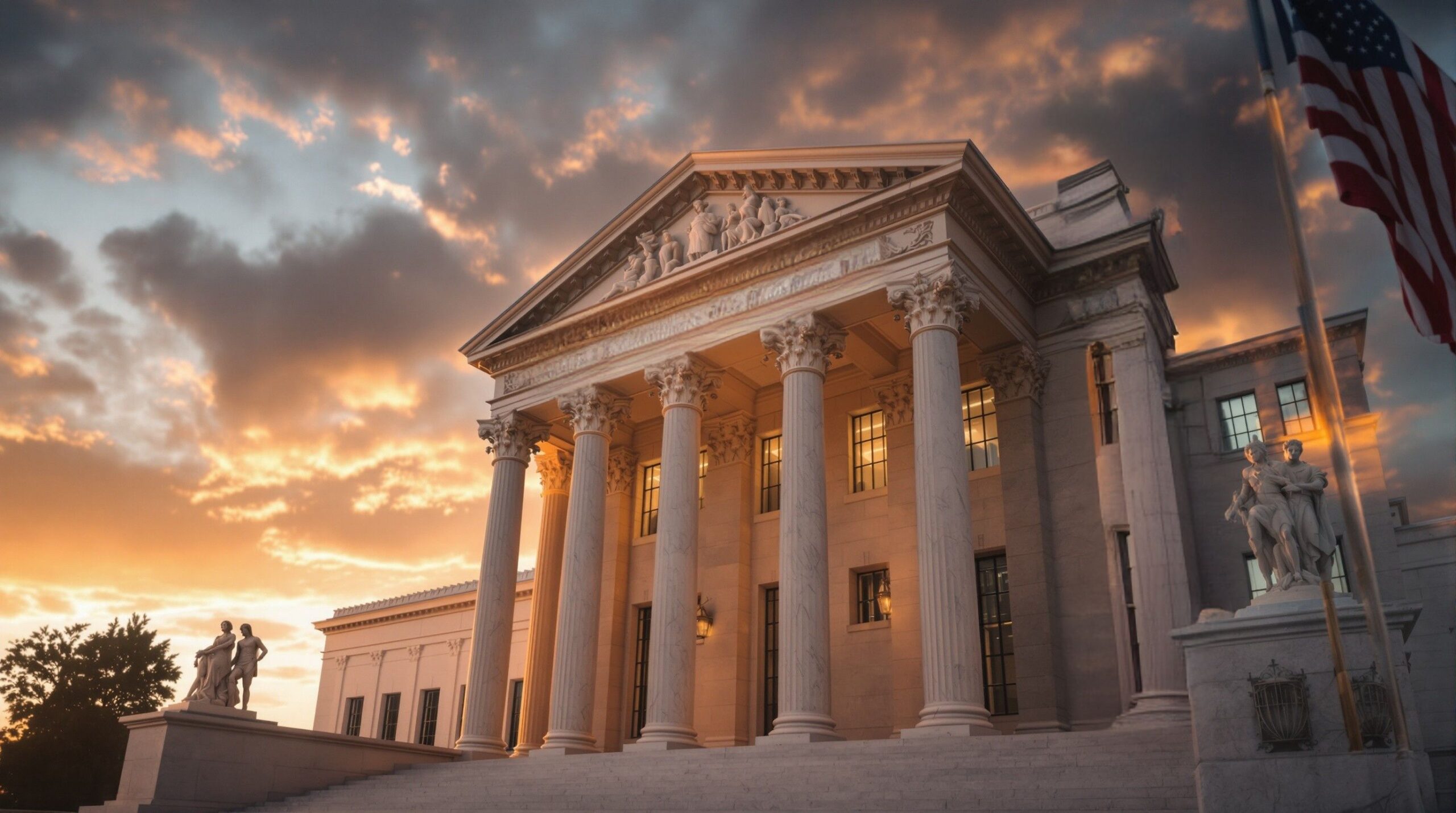
Religion and the Establishment Clause explore one of the Constitution’s most delicate balances: protecting religious freedom while preventing government endorsement of belief. This collection of articles examines the landmark Supreme Court cases that have shaped how faith and government interact in public life, from prayer in schools and religious displays to funding questions and faith-based exemptions. Through these pivotal decisions, the Court has wrestled with defining where personal belief ends and state authority begins, often amid intense cultural and political debate. Each case reveals how changing social values, diverse religious traditions, and evolving interpretations of the First Amendment have influenced constitutional law. Together, these rulings show that the Establishment Clause is not about limiting faith, but about preserving a pluralistic society where belief remains a personal choice, free from government pressure or preference. Whether addressing public institutions, civic spaces, or individual rights, this section offers insight into how the Supreme Court has navigated one of America’s most enduring constitutional questions. Here, history, law, and belief intersect, illustrating how the Constitution continues to guide a nation committed to both religious liberty and governmental neutrality.
A: Government actions that create, endorse, fund in a preferential way, or coerce religious practice—especially in official settings.
A: No—private religious speech can be protected; the key question is whether it’s government-sponsored or coercive.
A: Often yes privately and voluntarily; what’s usually prohibited is school-led or school-endorsed prayer.
A: Sometimes—neutral programs with private choice and equal eligibility are often analyzed differently than direct sponsorship.
A: When people feel pressured to participate to avoid exclusion, retaliation, or social penalty—especially students.
A: Sometimes; legality often depends on tradition, non-discrimination, and lack of pressure or exclusion.
A: When government sends the message that a particular faith (or religion generally) is officially favored.
A: Government getting too involved in religion—monitoring doctrine, controlling clergy decisions, or supervising worship practices.
A: Yes—through the Fourteenth Amendment, states and cities are bound by these limits too.
A: Ask: Is the government speaking or pressuring? Is the rule neutral? Is participation truly voluntary? Is access equal?