

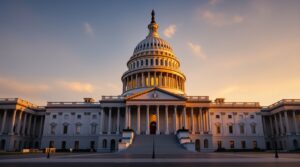
The Legislative Branch
The Legislative Branch stands at the heart of American democracy, shaping the laws that guide everyday life and reflect the will of the people. Established by Article I of the Constitution, Congress was designed to be powerful, deliberate, and closely tied to the citizens it represents. Through spirited debate, careful compromise, and a system of checks and balances, the House of Representatives and the Senate work together to propose, refine,

The Executive Branch
The Executive Branch brings the laws of the United States to life, transforming ideas written on paper into action felt across the nation. Established by Article II of the Constitution, this branch was designed to provide energy, leadership, and accountability within the federal government. Led by the President, supported by the Vice President, and carried out through executive departments, agencies, and advisors, the Executive Branch is responsible for enforcing laws,
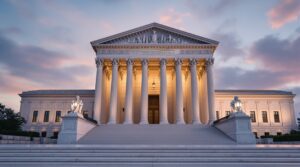
The Judicial Branch
The Judicial Branch serves as the guardian of the Constitution, interpreting the law and ensuring that justice is applied fairly and consistently across the nation. Established by Article III, this branch was designed to stand independent from political pressure, protecting individual rights while upholding the rule of law. Through the Supreme Court and the federal court system, judges examine disputes, resolve constitutional questions, and determine whether laws and government actions
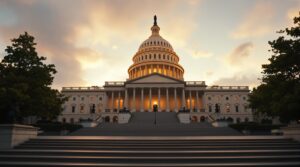
Congress and the Constitution
Congress and the Constitution are inseparably linked, forming the foundation of how representative lawmaking works in the United States. The framers placed Congress first in the Constitution to emphasize its central role in reflecting the will of the people while carefully limiting its power through structure and procedure. Article I outlines what Congress can do, how it must operate, and where its authority ends, creating a system built on debate,

Presidential Powers
Presidential Powers define how leadership, authority, and responsibility converge at the highest level of the United States government. Rooted in Article II of the Constitution, these powers were carefully crafted to give the President enough strength to govern effectively while remaining firmly constrained by law and checks from the other branches. From enforcing federal laws and directing the executive branch to commanding the armed forces and shaping foreign policy, presidential
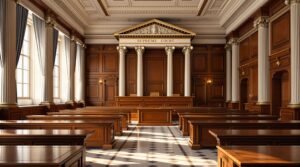
Supreme Court Structure
Supreme Court Structure reveals how the highest court in the United States is carefully designed to preserve independence, stability, and constitutional balance. Established by Article III of the Constitution, the Supreme Court was built not just as a legal body, but as a safeguard for the rule of law itself. From the number of justices to lifetime appointments, every structural choice reflects the framers’ intent to insulate the Court from

Federal vs. State Authority
Federal vs. State Authority sits at the core of American constitutional design, defining how power is shared, balanced, and sometimes contested within the United States. From the very beginning, the Constitution sought to solve a central challenge: creating a strong national government without erasing the independence of the states. The result was federalism, a system in which authority is divided between federal and state governments, each with its own responsibilities,
Impeachment and Oversight
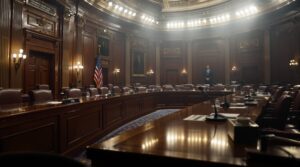
Impeachment and Oversight represent two of the most powerful tools the Constitution gives Congress to preserve accountability and protect the rule of law. Rather than serving as weapons of politics, these mechanisms were designed as safeguards—ensuring that no public official, regardless of position, stands above constitutional limits. Impeachment provides a formal process for investigating and addressing serious misconduct by federal officials, while oversight allows Congress to monitor, question, and review
Constitutional Crises
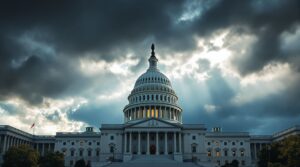
Constitutional Crises emerge at moments when the foundations of American government are tested, challenged, or pushed to their limits. These are the rare but defining periods when the meaning of the Constitution is not merely debated in theory, but contested in real time through political conflict, institutional strain, and national uncertainty. From disputes between branches of government to clashes over executive power, elections, and civil liberties, constitutional crises reveal both

Government Accountability
Government Accountability is the principle that ensures power is exercised responsibly, transparently, and in service of the people. At the core of the Constitution is the idea that no office, institution, or official operates without limits or scrutiny. Accountability transforms authority into trust by requiring those who govern to answer for their decisions, actions, and use of public power. This section of Constitution Street explores how accountability is built into